How Yasurime on a Tang Helps in Appraising Japanese Swords

Yasurime, decorative file patterns on the tang of a Japanese blade, are more than just an aesthetic detail—it’s a vital clue in uncovering a sword’s history. These patterns, unique to individual swordsmiths, schools, and historical periods, serve as a silent storyteller, revealing the blade’s age and origin.
Join us as we delve into the fascinating world of yasurime, exploring its appearance, the various types, and its critical role in the art of sword appraisal.
Appearance of Yasurime
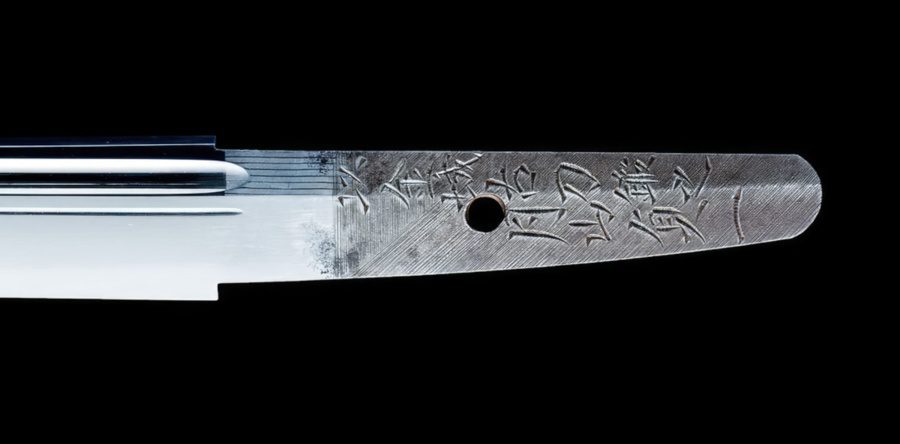
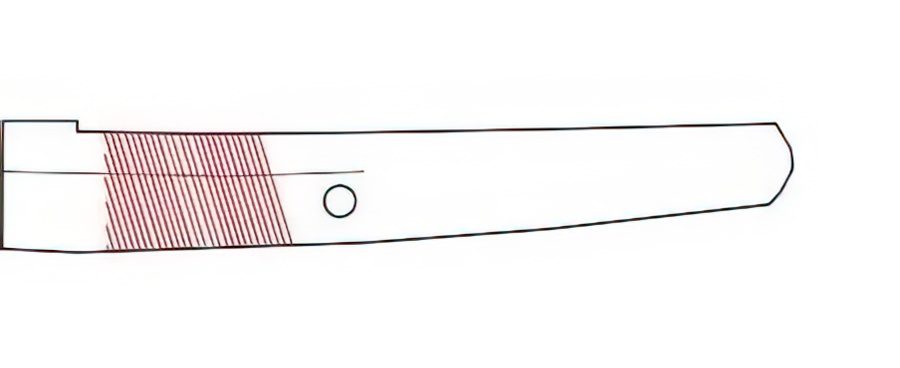
A Japanese sword tang features yasurime (distinctive file marks) next to the habaki (blade collar). Typically with the same pattern on both sides, these marks vary in depth, thickness, and spacing depending on the file used by the swordsmith.

However, each of the following surfaces of the tang must be filed separately:
- ji (steel surface of the sword)
- shinogi-ji (surface of the blade between the shinogi ridge line and the back surface)
- mune (unsharpened back surface of the blade).
Types of Yasurime
The terms “yasuri (file) and yasurime (file marks) describe the filing patterns or strokes on the tang. The style of filing varies in different swordsmiths, schools, and periods.
1. Kiri (Horizontal)
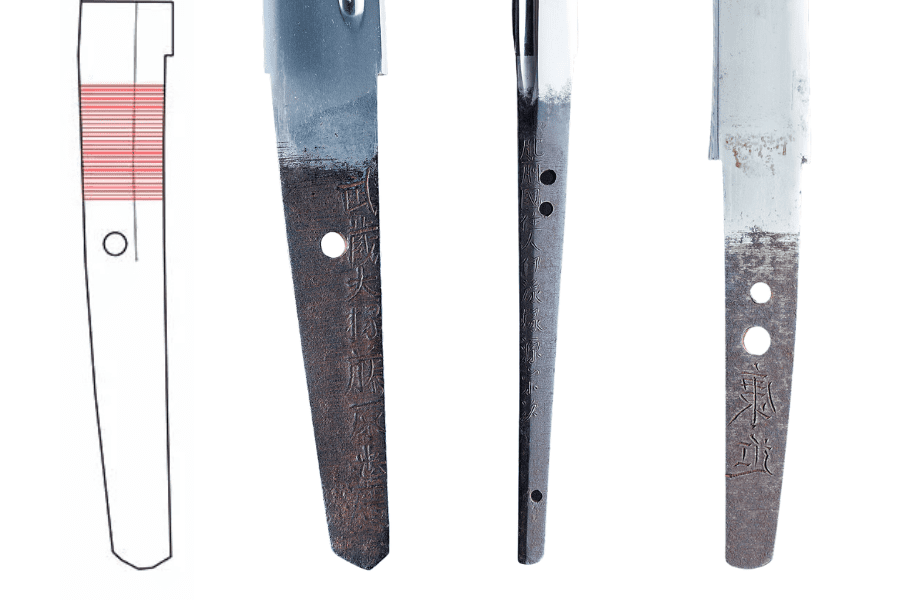
The most popular yasurime is Kiri yasurime, also known as yoko yasurime. They are often found on blades from Awataguchi and Rai schools of the Yamashiro tradition and the Shikkake school of the Yamato tradition.
- Pattern: Straight and horizontal, filed from edge to back
Old blades, such as those from tbe Koto era (approximately 1000 to 1600), may have worn file marks due to age.
2. Katte Sagari (Downward Slanting)
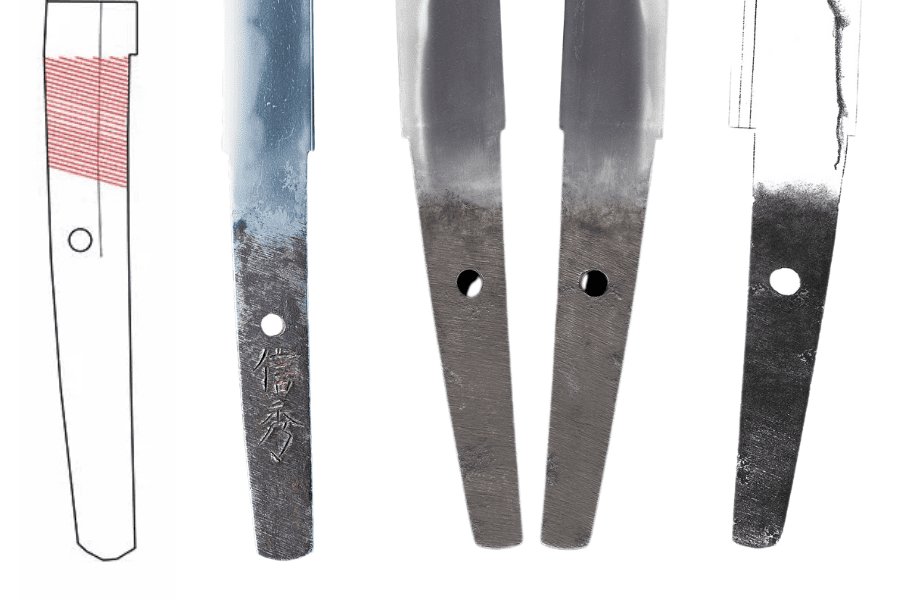
Katte sagari is the second most popular style throughout all periods and is also found on blades from the Awataguchi, Rai, and Shikkake sword making schools.
- Pattern: Slanting from top left to bottom right at a shallow angle, less than 45 degrees
3. Katte Agari (Upward Slanting)