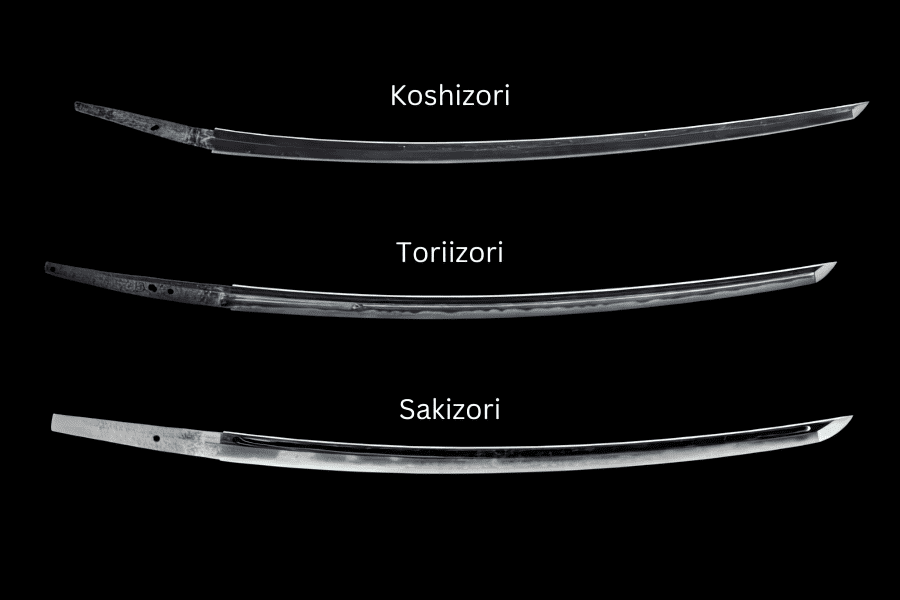


Sori, the curvature of a Japanese blade, can range from shallow to deep, with the most pronounced part of the curve varying along the entire length of the blade. There are different types of sori, each associated with specific periods of sword forging, making the curvature a good indicator of a sword’s production time.
KEY TAKEAWAYS
Sori refers to the curvature of a Japanese sword or dagger blade.
The curvature of the blade is described in terms of its location, namely: koshizori, toriizori, sakizori, uchizori, and takenoko-zori.
The most common type of sori found on Japanese swords is the toriizori, in which the deepest part of the curvature is located at the center of the blade.
What Exactly Is a Sori?
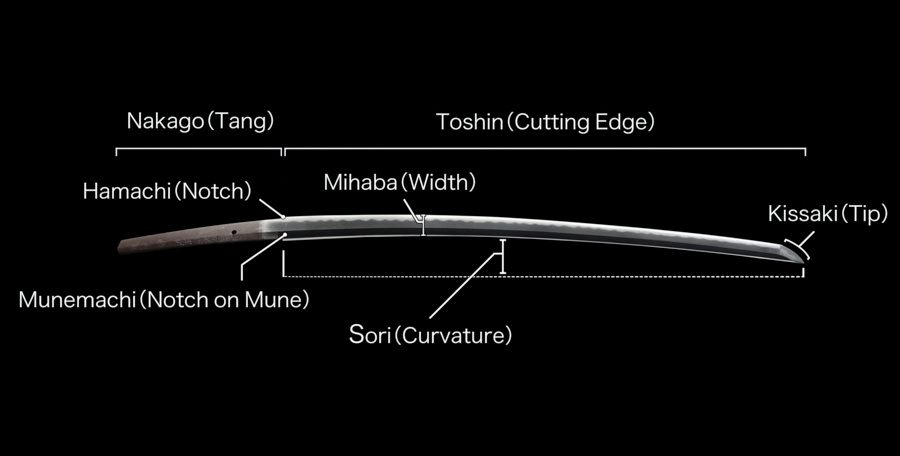
The sori (反り) refers to the curvature of a Japanese sword or dagger. It is measured between the deepest curve of the back surface (mune) and an imaginary straight line drawn from the notch (munemachi) at the top of the tang to the tip (kissaki).
If the blade has a curvature, the sori is the longest horizontal distance between the back surface (mune) and the imaginary straight line. This is also where the curvature of the blade is at its maximum. The depth of curvature can vary, described as either shallow or deep.
The sori is also characterized by its location on the blade, which can be near the tang, in the center, or near the tip. While several blades may share the same amount of curvature, their sori locations may vary, and they may feature differently shaped tangs (nakago).
Different Types of Sori (Curvature)
The sori of Japanese swords sets them apart from early chokuto, or straight swords. The depth and location of the curvature vary depending on the period in which the blade was forged, as Japanese swords underwent dramatic changes to suit the military tactics of the time.
Sori is typically pronounced and spelled as zori when preceded by other characters, hence koshizori, toriizori, sakizori, and so on. The term muzori (無反り), meaning no sori, is used to describe a tanto blade without curvature.
Sori mainly seen on sword blades: